
‘Full Time’ (2021) Review
Dir: Eric Gravel. France. 2023. 87mins
A gripping ode to single parents, Eric Gravel’s Full Time follows Julie, a mother struggling to maintain the balance of caring for her two young children and working as a chambermaid in a Parisian hotel. When a series of transport strikes make Julie's commute to work impossible, the stress starts to take a toll on her.
Have debuted at Venice Film Festival in 2021, the film was acquired by Parkland Entertainment and received its UK release in May. Gravel’s previous film, Crash Test Algaé never received a theatrical release in the UK so it’s unsure how audiences might respond to Full Time. However, the release has come at a very appropriate time given the rail strikes taking place in both the UK and France. Audiences who have experienced the impact of strikes recently could connect with Julie’s situation, potentially giving the film a broader audience than just those who are interested in French cinema.
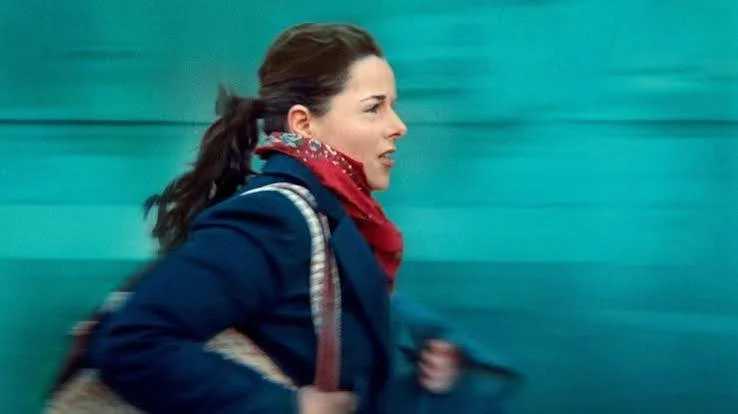
From a genre perspective, Full Time is difficult to pin down. The discussion of wealth disparity and unionised action feel typical of a social-realist film. The tensions created in Julie’s relationship with her children are reminiscent of melodrama. However, the film really plays like a thriller. Through the combination of quick cuts, frenetic camera movement and Irène Drésel’s pulsating score, Gravel imbues the film with a frantic energy. The closest this film gets to an action sequence is Julie sprinting to make a train just as the doors close. But the desperateness of Julie’s situation, and the dynamic visual style with with Gravel presents it, is entirely engrossing.
Issues around public transport and commuting are very relatable, real world issues, yet they’ve rarely been depicted this authentically on screen. While the emotional stakes of the film are very personal to Julie, we are given brief glimpses into the wider impacts of the strikes. Moments at overcrowded train stations and bus stops are evocative of scenes from a disaster movie. Snippets of discussions around government intervention and resolution of the strikes are heard through televisions and radios in the background, but just as Julie doesn’t have time to stop and listen to them, neither do we. The film resists getting distracted by the causes or solutions of the strikes, instead solely focusing on the practical implications that they have on Julie’s life. There’s a recurring visual motif of the camera zooming through densely populated crowd scenes, pulling in towards Julie’s face, cementing her as the emotional core to the story.
Rare moments of stillness come as Julie lies in bed at night. The film’s title sequence plays over a quiet montage of Julie’s face, obscured from our view. A later scene calls back to this image, as it hauntingly reveals that Julie’s eye remains wide open even as she sleeps. In lucid dreams, she recalls families holidays swimming in the ocean. Gravel distorts these memories, blurring the imagery as though Julie is struggling to recollect these moments of comfort that she’s clinging to.
Gravel rather boldly chooses to leave the film open-ended. It would be a disservice to Julie’s plight to have it all neatly resolved. In life, there are no easy fixes, and Gravel resists the urge to cheapen his film with one. There’s a climatic reveal which you would expect to feel like a moment of triumph. However, Calamy’s performance creates an immense sense of pathos. There is relief, but also hint of despair, as she comes to terms with the fact that the vicious cycle she has been caught in is about to start all over again.