
‘On the Edge’ (2023) Review
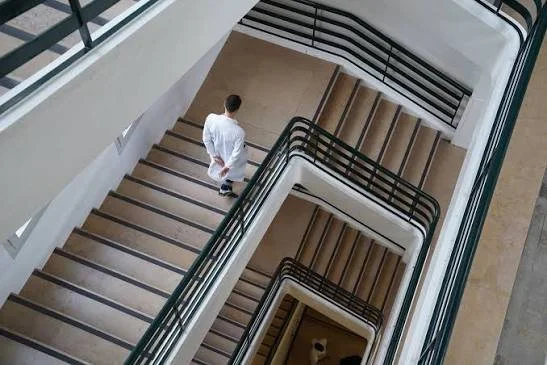
An unflinching depiction of life in a psychiatric ward, Nicolas Peduzzi’s On the Edge follows psychiatrist Jamal Abdel Kader and his colleagues as they navigate the everyday challenges of working in a run-down Paris hospital.
Having debuted at Copenhagen International Documentary Festival, and screened at Cannes in 2023, the film is still awaiting UK acquisition. It may not have the built-audience of recent celebrity driven documentaries like Moonage Daydream, but the film could find an audience in a world where discussions around mental health, especially around young people, are becoming increasingly less stigmatised. Additionally, sympathies towards the recent nurses strikes in the UK and around the world could mean the film’s raw depictions of the hospital staff’s working conditions have even more impact.
The film shares many of the formal qualities of the recent spate of Covid-19 documentaries, such as 76 Days and The First Wave. Utilising social-realist aesthetics, hand held cameras feel like they’ve been dropped into the epicentre of a crisis. The camera, much like the over-worked doctors and nurses, seems to never stop moving. Even the close ups and over the shoulders jitter around with a tense, almost nervous energy. This visual style is very effective in portraying the film’s empathy for the employees, as you feel like you’re witnessing events unfold along side them. And yet, whilst these moments feel very intimate and personal to Jamal and his team, you also get the sense that their story is just one of countless stories occurring in the building, which the moveable camera can barely keep up with.
There are also moments of more flashy directorial flourish. A phone conversation in an office shot at a canted angle signifies the imbalance in the system, a lack of funding for necessary rehabilitation and over-reliance on medication. They’re used to good effect, but sparingly, so they never become distracting, leaving the film’s subjects front and centre, as they should be.
The film offers a glimpse into how the staff go about trying to put their patients at ease. These range from physical restriction and tranquillisation to a mundane conversation about preferences between Scrubs, Grey’s Anatomy and House, M.D.. In such a busy, confusing environment, Peduzzi manages to find moments of stillness, using black and wide tableaus to provide moments for reflection. In these moments, Gael Rakotondrabe’s simple yet affecting score really shines. One of the film’s most traumatic scenes features a patient having to be tied down. For this sequence, Peduzzi cuts away from the footage, utilising only the sound of the event, played over another still image - an example of welcomed restraint. The film certainly doesn’t feel like it’s pulling it’s punches, but it also recognises what could be too much for an audience. You feel all the vulnerability and pain of that scene without needing to see the physical act.
The film embraces many of the moral grey areas and ‘impossible situations’ that the hospital staff face every day. The framing of the dilapidated building blurs the lines between a hospital and a prison. Actions that feel immoral, ‘I wouldn’t want it to be done to me’, become necessary evils in an environment that restricts care-giving more than it supports it. Each of the hospital staff seem to have their own causes of this systematic failing, from the role of the urban environment to a working culture that allows someone to feel as though they are ‘just a nurses aide’. The film doesn’t offer definitive answers to these questions, instead opting to foreground the immense empathy and selflessness with with the doctors and nurses conduct themselves, which is where the film’s real power lies.