
‘Wonderland’ (1999) Introduction
Good evening, Welcome to the Prince Charles cinema. My name is Archie Marshall, I’m a programmer and welcome to tonight’s 25th anniversary screening of Michael Winterbottom’s Wonderland in collaboration with Lost Reels.
Wonderland centres around the lives of three sisters, Nadia, Debbie and Molly. Told over the course of a long weekend, we’re offered a glimpse into the turbulent lives of an extended family. It’s a film all about relationships, from sisterly bonds to broken marriages and all the messy attempts at connection that lie in between. Winterbottom has revealed his concept for the film was heavily inspired by Robert Altman’s Short Cuts, and it’s tangled web of rotating characters. The film also evokes similar feelings to Paul Thomas Anderson’s Magnolia (released in the same year as Wonderland), in it’s exploration of how small actions can have large consequences on the lives of those around you.
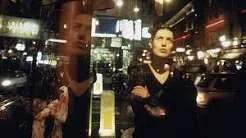
The film’s aesthetics blur the lines between realist and impressionist. Cinematographer Sean Bobbitt, who would later go on to become a frequent collaborator of Steve McQueen, shoots the film in a way that feels very timely for the turn of the century. The film is primarily shot on grainy, hand-held 16mm cameras, which give a lo-fi, ‘fly-on-the-wall’ type feel. But this is contrasted with ‘fantastical’, time-lapse sequences, very much in the style of Wong Kar-Wai’s Chungking Express. The dialogue between these two visual styles feels very much of a film made and set on the cusp of a new millennium. The visual codes of a history of social-realist cinema meet the new tricks of the digital age. In this way, Wonderland exists alongside Lynne Ramsay’s Ratcatcher and Pawel Pawlikowski’s Last Resort, a class of films charged with bringing the social-realist, ‘kitchen-sink’ dramas into a more visually dynamic, expressionist form.
It may be an old cliché to suggest that ‘the city is a character’, but I think it’s certainly applicable here. Wonderland is, in many ways, a time capsule of a bygone era for the nation’s capital. A modern reimagining of the city symphony films of the 1920s. Whilst there’s some obvious points of difference, humour to be found in the notion that you could have ever bought “a salt beef and a cappuccino” for just £3, what may strike you is just how little the city has actually changed. Even though the film flirts with the fantastical, it’s a starkly honest depiction of London.
This is partly achieved through shooting in real places, with many of the film’s notable locations like the pub or the cafe where Nadia works being real locations, with real people populating the backgrounds of the shots. In a decade of Notting Hill’s and Sliding Doors’, the London seen in Wonderland certainly provides a contrast. Writer David Jenkins suggests that the film “captures the streets of the capital with a starkness and clarity rarely seen this decade (the 90s), bypassing snow-globe landmarks in favour of bottling the feeling of a heady, almost etherial disconnect that comes from wandering alone through an urban metropolis”.
Though, perhaps ‘alone’ isn’t the right word. Whilst Wonderland’s characters often feel isolated or lonely, it’s hard to ever really be alone in a city of 7 million people. There’s a potent sense of community in the film. Nowhere is this more evident that in a sequence where Ian Hart’s Dan takes his son to a football match at a packed out Selhurst Park (yet another scene filmed on location). Very little of the match itself is actually shown, with the camera instead cutting frequently between reaction shots from the fans, cheering and wincing at the game. You quickly lose Dan and his son amongst the sea of faces. Each cut serves as a reminder that every face in the crowd has a story. A story that we don’t know. This is for me a deeply humanist moment, where Winterbottom pulls back the focus from the central family, allowing the many individual faces to become a part of something whole.
I’d be remise not to give some praise to Michael Nyman’s beautiful score. Nyman, who is perhaps best known for his work on Jane Campion’s The Piano, is on record that Wonderland is the favourite score of his career. The visuals of London may feel familiar, but when the dizzying, Timelapse visuals are paired with Nyman’s soaring orchestral score, the film becomes an odyssey into a strange, mystifying land. The birth of a character named in Alice into the titular Wonderland is no accident.
The film played in competition at Cannes in 1999, and to this day remains one of Winterbottom’s best received films. But over the course of it’s 25 years, it’s become increasingly difficult to see. It’s currently unavailable in any home entertainment format, so it’s a real pleasure to be able to screen it for you tonight.
So as we take this journey down the rabbit hole, thank you very much for listening and I hope you enjoy the film.