
‘Watching the Detectives’ (2017) Introduction
Hi everyone, for those who don’t know me, my name is Archie, I’m a 2nd year curation student and I’m pleased to be here introducing Watching the Detectives (2017), a film that feels perfect for today given the way that it blurs our prompts of Internet and Investigation together, in some really interesting ways.
Just out of curiosity, could I get a show of hands, who in the room has ever been on Reddit?
I’m sure anyone who hasn’t is at least familiar with it, but in case not, Reddit is a forum based social network, where contributors start threads on all manner of topics, from politics to pop culture. It’s unclear whether this was always the intention, but over the years the platform has devolved into a breeding ground for alt-right conspiracy theories. It facilitated the rise of organisations like Q Anon, media frenzies like ‘Pizzagate’, and in the case of today’s film, the quote-unquote “solving’ of the Boston Bombing.
On the 15th of April 2013, at the annual Boston Marathon, two homemade pressure cooker bombs were detonated near the finish line. 3 people were killed, along with several hundreds injured, many of whom lost limbs in the blast. It was and remains, one of the largest domestic terror attacks in America’s history.
Unsurprisingly, for an event of such scale, the bombing has been covered fairly extensively in film, both in more formally traditional documentaries and series of probably distasteful narrative films, mostly starring Mark Wahlberg. But in his 2017 documentary Watching the Detectives, director Chris Kennedy views the bombing and it’s aftermath through a unique lens, capturing the real-time emergence of a community of amateur, arm-chair detectives who set out to find the culprits.
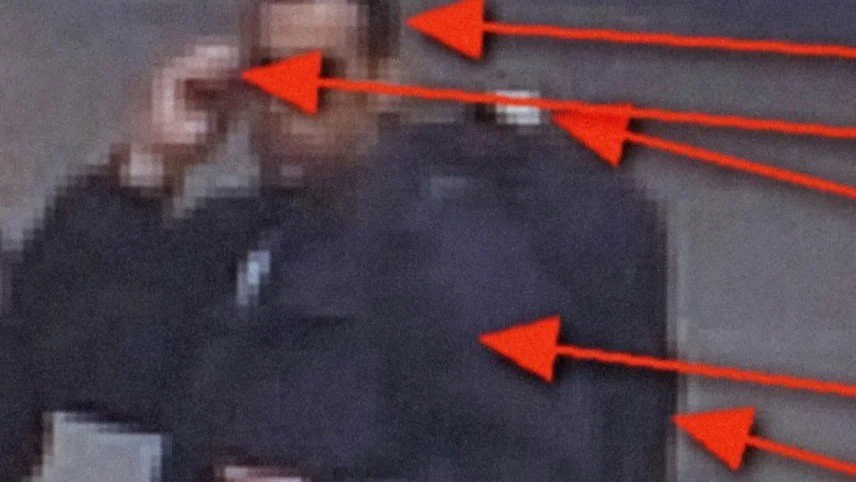
Adopting the style of desktop documentary, Kennedy’s film comprises of both still images of before and after the attack, which the FBI released to the public to encourage help with identifying the suspects, and a series of posts from the subreddit r/FindBostonBombers. In just 36 minutes, we see characters, heroes and villains emerge from the faceless musings of these posts.
The interactions held on this forum manage to capture the breadth of human experience online, both the good, in a group of people coming together to work towards a collective goal, and the bad, in the vitriol, bigotry and prejudice with which the anonymous posters address both their suspects and each other.
Given the brevity of it’s runtime, the films has so many questions to raise. In an era of fake news, can it be helpful that everyone’s opinion is their own truth, even when categorically proven incorrect? Can freedom of access and information exist in a forum that was, after a certain point in the investigation, an invite only thread?
The work of these amateur detectives, and they are amateurs in both senses of the word, sparks a lot of very existential queries, but also had some very concrete consequences, which I think will be best discussed after we’ve watched the film. But it’s safe to say that, among the extremely dry, millennial humour of it’s commenters, Watching The Detectives serves as a cautionary reminder that our access to all of the information, all of the time has rarely been for our benefit.
In many ways, it’s a film about conversation, and I think it will inspire some great ones. I’m really excited to hear what you all make of it.
Just in terms of any trigger warnings, whilst there’s no overly graphic imagery of the bombings, some of the written descriptions of the injury detail suffered are quite intense, as well as the use of some troubling language, including homophobic and racial slurs.
But with all that said, I’d like to thank you very much for listening, and I hope you enjoy the film. Cheers.